Python From a White Sheet
De exacte volgorde die negen studenten al hebben gelopen, van een leeg bestand naar een programma dat vragen stelt, antwoorden controleert en slechte invoer weigert. Geen eerdere programmeerervaring. Geen wiskunde. Je zult het herhaaldelijk opzettelijk breken.
- trending_upBeginner
- schedule5h 43m
- menu_book12 lessen
- publicEnglish
- boltGratis aanbod
Inleiding
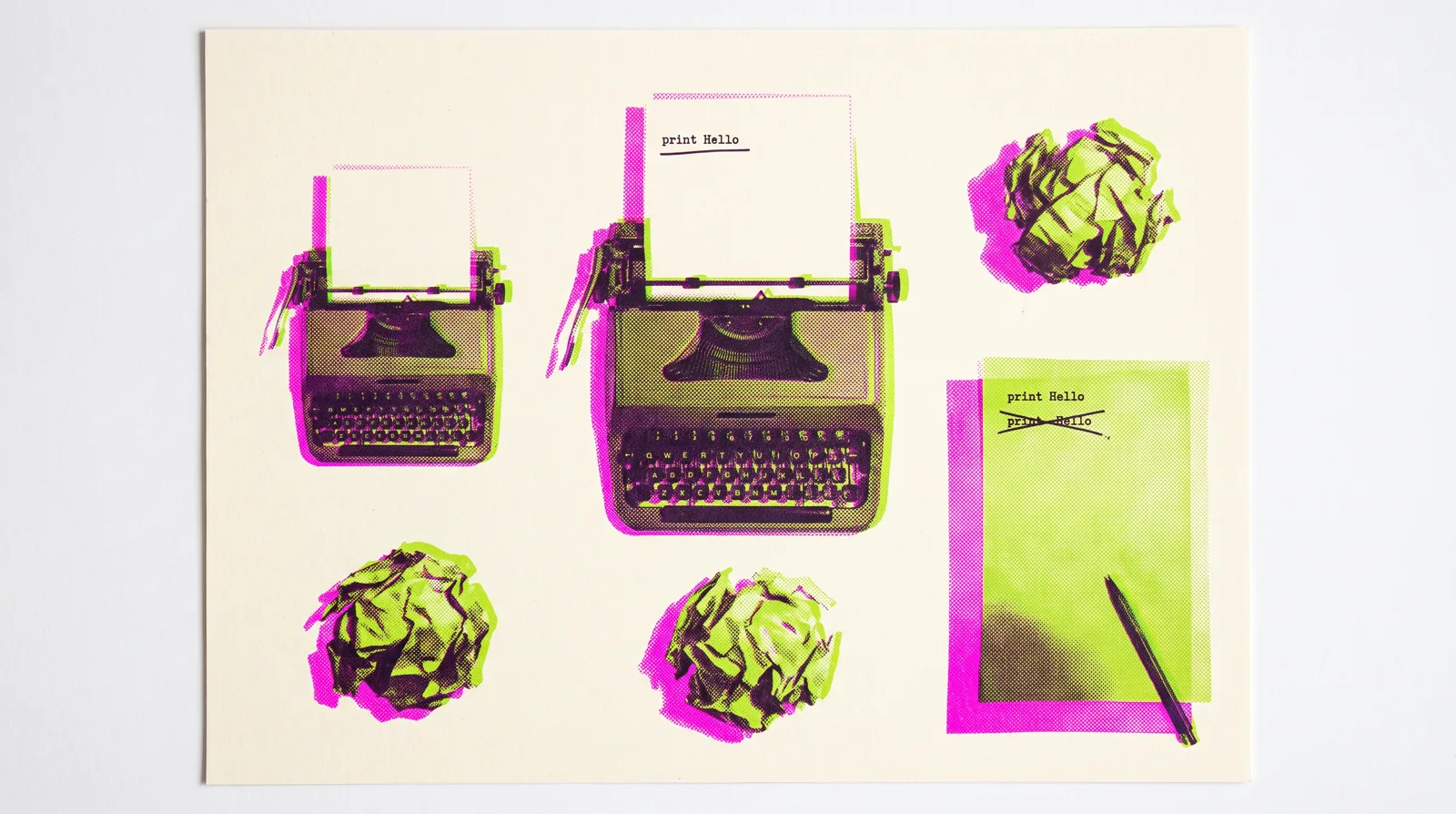
De meeste beginnersursussen tonen je werkende code en vragen je die te bewonderen. Deze plant de bug en laat hem afgaan. Je zult één programma schrijven over vier modules. Het begint als een enkele `print` regel en eindigt als iets dat een vraag stelt, wat iemand heeft getypt opschoont, beslist wat ermee te doen, rekenkunde erop toepast, onzin afwijst en loopt tot het tevreden is. Elke fout die je onderweg tegenkomt is er een die een echte student eerst heeft geraakt: de spatie aan het einde, de hoofdletter, de ontbrekende dubbele punt, het resultaat dat je bent vergeten op te slaan, het getal dat stiekem een stukje tekst was. Aan het einde zul je Python niet hebben onthouden. Je zult kunnen uitvinden waarom iets niet werkt, wat het echte werk is.
Cursusopbouw · 4 modules
lockBeschikbaar met toegang- 01 First Contact3 lessen·1h 13m
Hier is niets conceptueel. Je typt, je voert uit, je leest wat de computer zegt. De enige vaardigheid die in deze module wordt getraind is het lezen van een foutmelding in plaats van er paniekering…
- 02 Functies en Beslissingen3 lessen·1h 27m
Twee regels komen in deze module en gelden voor de rest van je leven in Python. Alle definities hierboven, alle aanroepen onderaan. En inspringing zijn denkbeeldige haakjes — de computer bepaalt wat…
- 03 Schoonmaken Wat Mensen Typen3 lessen·1h 8m
Vuile borden gaan in de gootsteen voordat ze in de kast gaan. Niets wat een persoon heeft getypt gaat in je logica totdat het door clean() is gegaan.
- 04 Getallen, Validatie en Lussen3 lessen·1h 55m
Garbage in, garbage out. input() geeft je altijd tekst, zelfs als het eruitziet als een getal, en het programma dat het vertrouwt is het programma dat voor iemand crasht.
Veelgestelde vragen
- Wat leer ik in Python From a White Sheet?
- De exacte volgorde die negen studenten al hebben gelopen, van een leeg bestand naar een programma dat vragen stelt, antwoorden controleert en slechte invoer weigert. Geen eerdere programmeerervaring. Geen wiskunde. Je zult het herhaaldelijk opzettelijk breken.
- Heb ik eerdere ervaring nodig?
- Nee — Python From a White Sheet begint bij de basis en is geschikt voor beginners.
- Hoeveel tijd kost Python From a White Sheet?
- Python From a White Sheet bevat 4 modules en 12 lessen. Je leert in je eigen tempo.
- Hoe krijg ik toegang?
- Python From a White Sheet maakt deel uit van het gratis aanbod — maak een gratis account aan en voeg het toe aan je collectie.
Meer in Programmeren