Python vom leeren Blatt
Die genaue Abfolge, die neun Studierende bereits gegangen sind: von einer leeren Datei zu einem Programm, das Fragen stellt, Antworten überprüft und fehlerhafte Eingaben ablehnt. Keine Vorkenntnisse in Programmierung. Keine Mathematik. Du wirst es absichtlich mehrfach zum Scheitern bringen.
- trending_upBeginner
- schedule5h 43m
- menu_book12 Lektionen
- publicEnglish
- boltKostenlos
Briefing
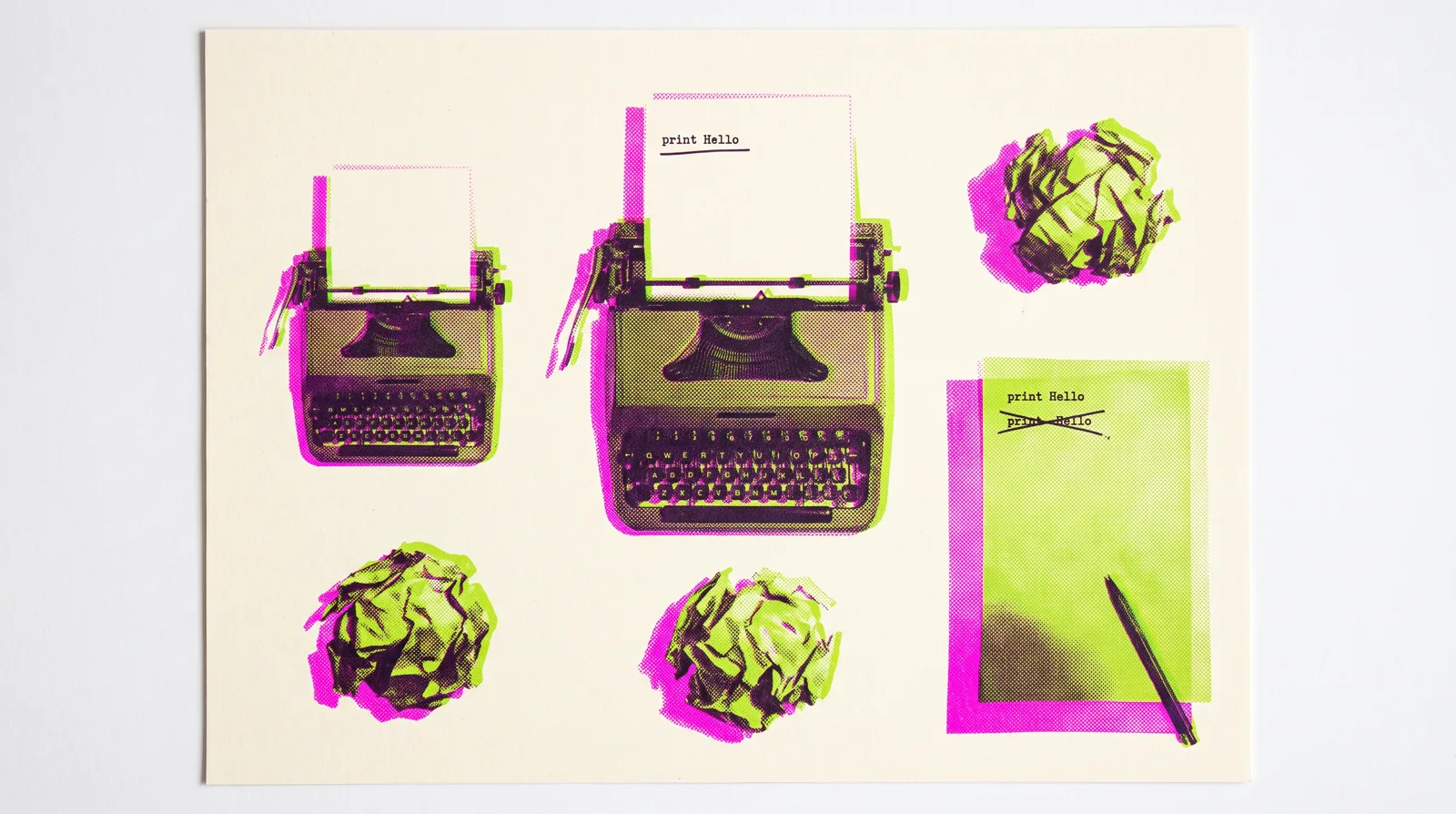
Die meisten Anfängerkurse zeigen dir funktionierenden Code und bitten dich, ihn zu bewundern. Dieser hier pflanzt den Bug und lässt ihn explodieren. Du schreibst ein Programm über vier Module. Es beginnt mit einer einzigen `print`-Zeile und endet als etwas, das eine Frage stellt, das Eingetippte bereinigt, entscheidet, was damit zu tun ist, Arithmetik damit anwendet, Unsinn ablehnt und wiederholt läuft, bis es zufrieden ist. Jeder Fehler, dem du auf dem Weg begegnest, ist einer, auf den ein echter Student zuerst gestoßen ist: das nachfolgende Leerzeichen, der Großbuchstabe, der fehlende Doppelpunkt, das Ergebnis, das du nicht gespeichert hast, die Zahl, die insgeheim ein Textstück war. Am Ende wirst du Python nicht auswendig gelernt haben. Du wirst herausfinden können, warum etwas nicht funktioniert – das ist die eigentliche Aufgabe.
Kursübersicht · 4 Module
lockFreigeschaltet mit Zugang- 01 First Contact3 Lektionen·1h 13m
Hier ist nichts theoretisch. Du tippst, du führst aus, du liest, was der Computer zurückschreibt. Die einzige Fähigkeit, die in diesem Modul trainiert wird, ist das Lesen einer Fehlermeldung, statt…
- 02 Funktionen und Entscheidungen3 Lektionen·1h 27m
Zwei Regeln treffen in diesem Modul ein und gelten für dein ganzes Leben in Python. Alle Definitionen oben, alle Aufrufe unten. Und Einrückung sind imaginäre Klammern — der Computer entscheidet, was…
- 03 Bereinigung von Benutzereingaben3 Lektionen·1h 8m
Schmutziges Geschirr kommt ins Spülbecken, bevor es in den Schrank geht. Nichts, das eine Person getippt hat, gelangt in deine Logik, bis es clean() durchlaufen hat.
- 04 Zahlen, Validierung und Schleifen3 Lektionen·1h 55m
Garbage in, garbage out. input() gibt dir immer Text, auch wenn er wie eine Zahl aussieht, und das Programm, das darauf vertraut, ist das Programm, das vor jemandem abstürzt.
Häufig gefragt
- Was lernst du in Python vom leeren Blatt?
- Die genaue Abfolge, die neun Studierende bereits gegangen sind: von einer leeren Datei zu einem Programm, das Fragen stellt, Antworten überprüft und fehlerhafte Eingaben ablehnt. Keine Vorkenntnisse in Programmierung. Keine Mathematik. Du wirst es absichtlich mehrfach zum Scheitern bringen.
- Brauche ich Vorkenntnisse?
- Nein — Python vom leeren Blatt beginnt bei den Grundlagen und ist für Anfänger geeignet.
- Wie lange dauert Python vom leeren Blatt?
- Python vom leeren Blatt umfasst 4 Module und 12 Lektionen. Du lernst in deinem eigenen Tempo.
- Wie bekomme ich Zugang?
- Python vom leeren Blatt ist Teil des kostenlosen Angebots — erstelle ein kostenloses Konto und füge es zu deiner Sammlung hinzu.
Mehr in Programming