code grc

连续性和恢复——没人测试过的恢复

恢复点和恢复时间作为人们能感受到的东西,而不是两个缩略词。一份用真实数据做出的业务影响分析,四个恢复层级的定价,实际被还原过的备份,以及一次按时钟运行并诚实记录的恢复演练。一门独立课程,与 ISACA 无关联且未获其认可。

  • trending_upIntermediate
  • schedule7h 54m
  • menu_book12 节课程
  • publicEnglish
  • workspace_premiumBasic
连续性和恢复——没人测试过的恢复

课程概述

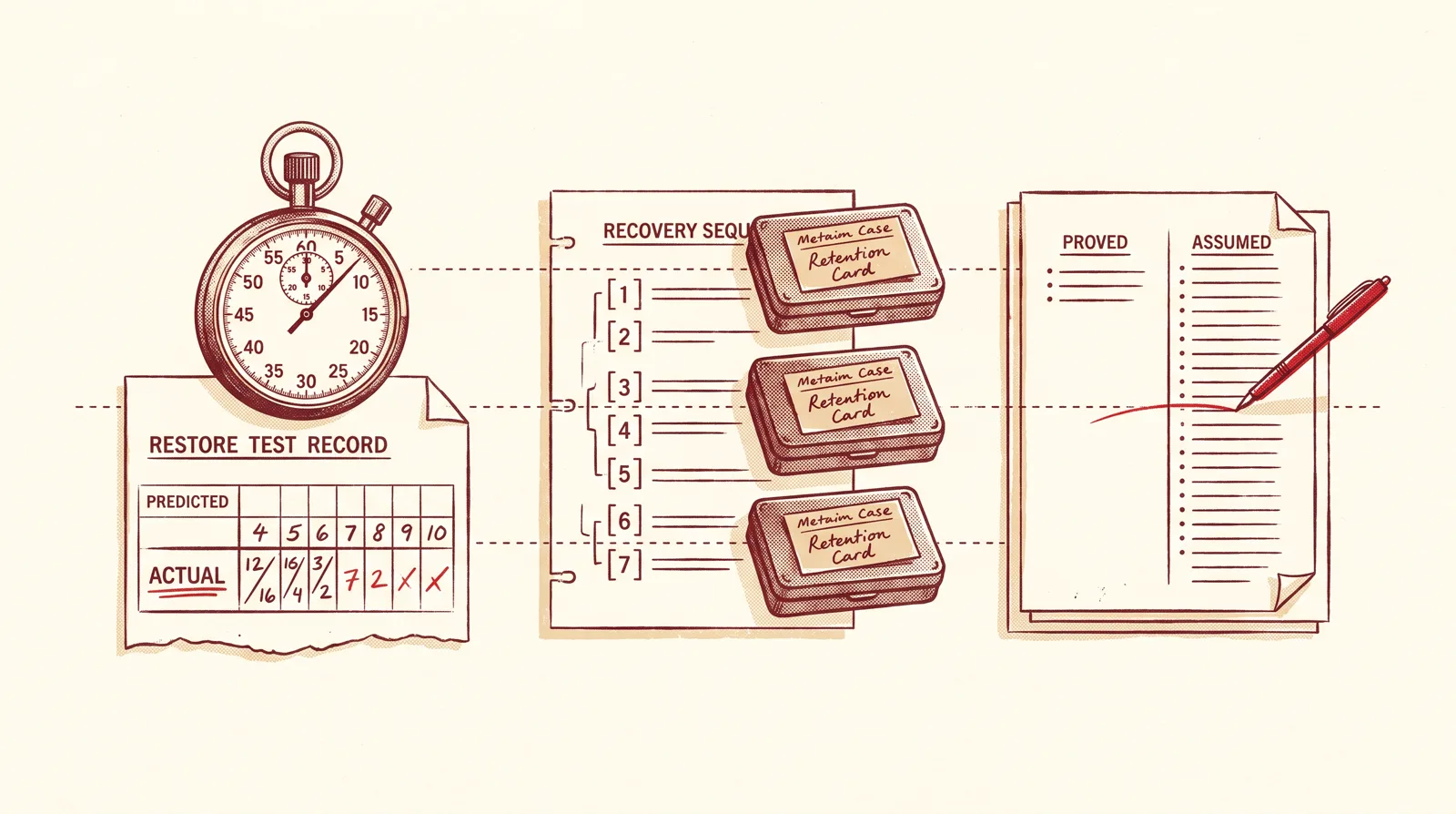
这个房间里的每个人都能背出这两个缩略词。你在 R1 段学过它们作为考试陷阱,能在三秒内回答一张混合卡片。本段不重复任何一个定义。它从第一分钟开始就假设两者都已掌握,然后向前推进到一个组织实际上必须产生的东西,那就是一个已被证明有效的恢复。 每晚报告成功但从未有人读回过的备份,是一个声称而不是一个能力。写在计划里但从未测量过的恢复时间是某人编造的数字。从未被启用过的热备用是一笔购买,不是一种保护。本段的整个主题是组织对其恢复的信念与事实之间的差距,而你缩小这个差距的方式就是去做它、计时它,然后写下你证明的东西和你只是假设的东西。 用十二堂课你可以用你自己生成的数字建立一份业务影响分析,绘制一条原来是阶梯而不是斜线的损失曲线,把一个流程向外映射直到它超出你的控制范围,为四个恢复层级定价并推荐其中一个,根据最可能需要它的故障来设计备份集合,用秒表运行一次真实还原,排序一个恢复使得并行工作实际上是并行的,用没有写过它的人来按时钟运行整个事情,然后写出主管会采取行动的两页报告。 每个模块都产生一个你自己计算出来的数字。没有这个它就变成了词汇表,而词汇表是连续性和恢复承受不起的一件事。 这是该主题的中断部分。事件部分——谁声明它、谁被唤醒、谁与监管者交谈,以及找出其中是否有任何是真实的的桌面演练——是段落 B5,本段在清晰标记的接缝处交接它并反向交接。 这是一门独立课程。它与 ISACA 无关联、未获其认可也未获其批准,不复制任何 ISACA 材料。使用的唯一 ISACA 衍生事实是公开发布的考试域名和权重。这里的每个场景和问题都是为本课程编写的。

课程大纲 · 4 个模块

lock解锁权限内容
  1. 01 业务真正无法承受的损失
    3 节课程·1h 34m

    R1讲授了定义和考试陷阱,本模块不重复它们。本模块假定两者都已掌握,并将其纳入数字。你自己产生的第一个数字是返工堆积的规模;最后一个是一个流程所依赖的、组织内没人能恢复的事物数量。

  2. 02 恢复等级及其成本
    3 节课程·1h 45m

    只有四种恢复方案,产品名称每年都会改变。本模块根据你真实的等级而非合同上的等级命名,使用 B2 的成本计算方法标价升级到更快的方案的差额,并找出金钱停止产生价值的点。每个建议都以廉价的测量开始,然后才是昂贵的购买。

  3. 03 已恢复的备份
    3 节课程·1h 46m

    一个报告成功但从未被读回的备份是一个声明,不是一种能力。本模块根据最可能需要备份的故障来设计备份集,列出恢复除了数据之外所需的一切,然后实际恢复一个数据集并计时。让人们惊讶的数字是恢复过程中花在查找信息上的比例。

  4. 04 测试
    3 节课程·2h 49m

    恢复演练不是证明计划有效的演示。它的存在是为了找出计划的空白之处,随后的报告包含三项变更,而非十一项。决定一切的数字是那个将在真实条件下通过的步骤与仅因某人恰好已登录而通过的步骤区分开来的数字。

常见问题

我将在 连续性和恢复——没人测试过的恢复 中学到什么?
恢复点和恢复时间作为人们能感受到的东西,而不是两个缩略词。一份用真实数据做出的业务影响分析,四个恢复层级的定价,实际被还原过的备份,以及一次按时钟运行并诚实记录的恢复演练。一门独立课程,与 ISACA 无关联且未获其认可。
我需要有先前的经验吗?
建议在开始 连续性和恢复——没人测试过的恢复 前具有一定的先前知识。
连续性和恢复——没人测试过的恢复 需要多长时间?
连续性和恢复——没人测试过的恢复 包含 4 个模块和 12 节课程。您可以按自己的速度学习。
我如何获得访问权限?
连续性和恢复——没人测试过的恢复 包含在任何付费订阅中。

更多 编程 课程

Binary, Hex and Data Units
Beginner Binary, Hex and Data Units The topic that costs more marks than any other on the paper, taught by hand. Bits and bytes, binary and hex in all six directions, the 1000-versus-1024 trap, file sizes, transmission times, overflow, two's complement and character sets. Every module ends in a timed drill marked the way an examiner marks it.
从空白开始学 Python
Beginner 从空白开始学 Python 九位学生已经走过的确切步骤,从空白文件到一个能提问、检查答案并拒绝错误输入的程序。无需编程基础。无需数学。你会故意反复出错。
First Program — Scratch for ages 5–9
Beginner First Program — Scratch for ages 5–9 Nine Scratch blocks, three sessions of about twenty-five minutes, and one small program a child of five to nine builds themselves. Written for the parent sitting beside them: what to click, what they will get stuck on, what to say when it goes wrong, and when to keep your hands off the mouse.
AI Without the Hype
Beginner AI Without the Hype What the model is actually doing when it answers you, why that produces something that looks like thinking, why it invents citations, and the cost mechanic almost nobody explains: a chat resends the entire conversation on every single turn. You will do the arithmetic yourself.
IGCSE and GCSE Computer Science — Theory That Actually Gets Marked
Intermediate IGCSE and GCSE Computer Science — Theory That Actually Gets Marked The theory half of the paper, taught so it survives the exam room. The memory hierarchy and what actually happens at boot. Compilers, interpreters and assemblers, including the answer that sounds right and scores nothing. Databases from a spreadsheet up to keys and normalisation. DNS and the full path between pressing Enter and seeing the page. Systems software, and the ethical and legal section that is the easiest ten marks on the paper.
Programming for the Exam — Python Answers That Score
Intermediate Programming for the Exam — Python Answers That Score The programming half of the paper, taught at exam pitch. Pseudocode translated both ways, because the mark scheme is written in a notation nobody practises. Trace tables done column by column, including the ones with a loop and a condition inside it. Linear and binary search, bubble and insertion sort, what each costs and the comparison questions boards love. Validation against verification, and the boundary test data everybody forgets. Procedures against functions, and a systematic method for finding your own error with four minutes left.