Inside the Box — building a PC with your child
Four sessions at a kitchen table with a screwdriver, an old machine or a box of new parts, and a child who ends up naming every component, mounting the board, routing the cables and working a fault tree when it does not start. Written for the adult beside them: what the child does, what you never let them touch, and where to stop.
- trending_upBeginner
- schedule5h 51m
- menu_book12개 강의
- publicEnglish
- workspace_premiumBasic
개요
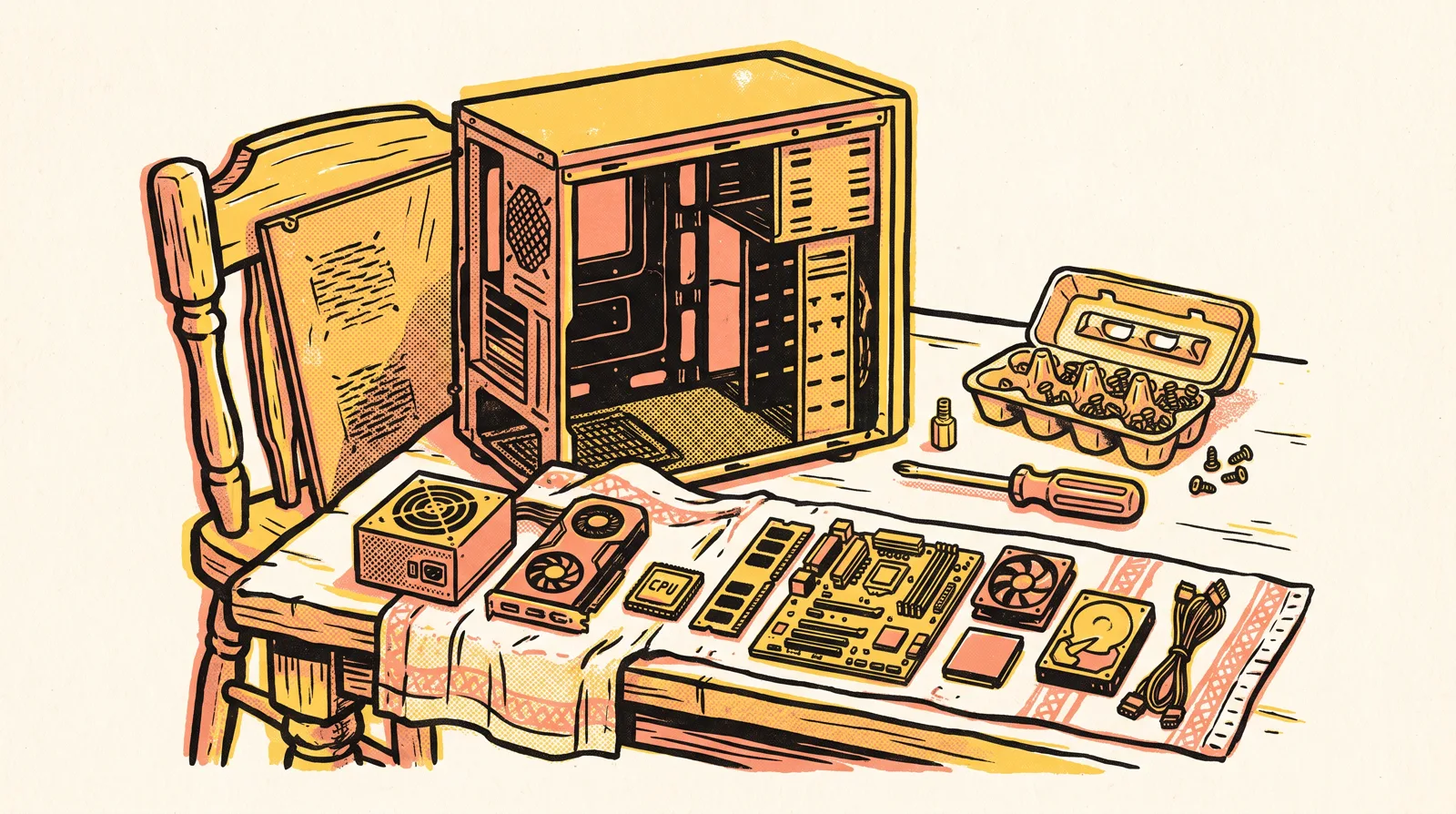
This is the segment that does not happen on a screen. A parent, a child, a cross-head screwdriver, and either a machine that has been in a cupboard since nobody remembers or a box of parts on the table. The order is deliberately backwards. Before anything is named, the case comes open and the child spends ten minutes pointing at things and getting them wrong, with the adult saying nothing. Only after that does each part get a real name and a one-sentence job. A child who has already held the power supply and felt how heavy it is does not need a diagram of one. Then it goes together: the brass spacers and the one extra spacer that kills a board silently, the memory that needs more force than anyone expects, the cooler tightened in a cross pattern, and the block of front-panel pins that has defeated people who do this for a living. Then it is switched on, and it does not work, because an adult sabotaged it beforehand. The child works a fault tree they drew themselves, one change at a time, writing down what they expected before each test. Safety is not a footnote here. Mains electricity is in the room. The power supply is never opened, by anyone, for any reason. Every hands-on lesson states plainly what the adult does and what the child does, and the unplug drill is rehearsed by the child before a panel comes off. The segment ends at the first successful power-on and not one step further. Putting an operating system on the drive is a different job in a different segment, and so is the exam theory behind what these parts are — this one is about metal, and every lesson has a path for a family with no spare machine and no budget.
강의 커리큘럼 · 4개 모듈
lock접근 시 이용 가능- 01 벤치와 규칙3개 강의·1h 7m
처음 십 분 안에 케이스를 열고 싶을 것입니다. 그러지 마세요. 이것이 작동하는지를 결정하는 세션은 아무것도 풀리지 않는 세션입니다: 어떤 머신인지, 다시 시작되지 않으면 무엇이 일어나는지, 누가 플러그를 만지는지, 그리고 아이가 암기해서 말할 수 있는 드릴. 아이가 자신의 필체로 쓴 계약은 다음 세 세션 동안 당신을 구속할 것이고, 그것이 핵심입니다.
- 02 그 안에 뭐가 있는가3개 강의·1h 17m
첫 번째 세션의 처음 10분 동안 아무말도 하지 않는다. 아이가 것들의 이름을 붙이고 그 중 여럿을 틀리며, 틀린 답변들은 다음 수업에서 고쳐지는 대신 테스트될 때까지 그대로 둔다. 그래픽 카드는 뇌라고 불릴 것이다. 그냥 둔다. 그것을 스스로 반박하는 것이 당신이 보여줄 수 있는 어떤 다이어그램보다 가치가 있다.
- 03 빌드3개 강의·1h 46m
이 수업 중 두 개에는 성인만 하는 단계가 포함되어 있고, 하나에는 이 전체 섹션에서 유일한 조용한 결함이 포함되어 있다: 보드 아래 황동 스페이서 하나가 더 있으면 기계가 시작되지 않는데, 불빛도 없고 경고음도 없고 보이는 것도 없다. 첫 번째 수업의 세기 방법은 번거로워 보인다. 이것이 모듈 4가 하루 저녁 대신 20분이 걸리는 이유다.
- 04 켜지지 않음3개 강의·1h 41m
이 수업 중 두 개는 아이가 들어오기 전에 의도적으로 고장나 있고, 기계를 망가뜨리는 것은 당신이다. 그것은 의도적이다: 설정된 장애는 타이밍을 선택한 실제 장애다. 다음 40분 동안 당신의 임무는 한 가지 질문을 던지는 것이다. 우리가 어느 가지에 있는가. 그리고 매번 콘센트를 통제해야 한다. 세션은 시작될 때 멈추거나 40분에서 멈추며, 두 가지…
자주 묻는 질문
- Inside the Box — building a PC with your child에서 무엇을 배우나요?
- Four sessions at a kitchen table with a screwdriver, an old machine or a box of new parts, and a child who ends up naming every component, mounting the board, routing the cables and working a fault tree when it does not start. Written for the adult beside them: what the child does, what you never le
- 사전 경험이 필요한가요?
- 아니요 — Inside the Box — building a PC with your child은 기초부터 시작하며 초보자에게 적합해요.
- Inside the Box — building a PC with your child은 얼마나 걸리나요?
- Inside the Box — building a PC with your child은 4개 모듈과 12개 강의로 구성되어 있고, 자신의 속도로 학습할 수 있어요.
- 어떻게 접근하나요?
- Inside the Box — building a PC with your child은 모든 유료 구독에 포함되어 있어요.
프로그래밍의 다른 강의