Inside the Box — building a PC with your child
Four sessions at a kitchen table with a screwdriver, an old machine or a box of new parts, and a child who ends up naming every component, mounting the board, routing the cables and working a fault tree when it does not start. Written for the adult beside them: what the child does, what you never let them touch, and where to stop.
- trending_upBeginner
- schedule5h 51m
- menu_book12 درس
- publicEnglish
- workspace_premiumBasic
معرفی اجمالی
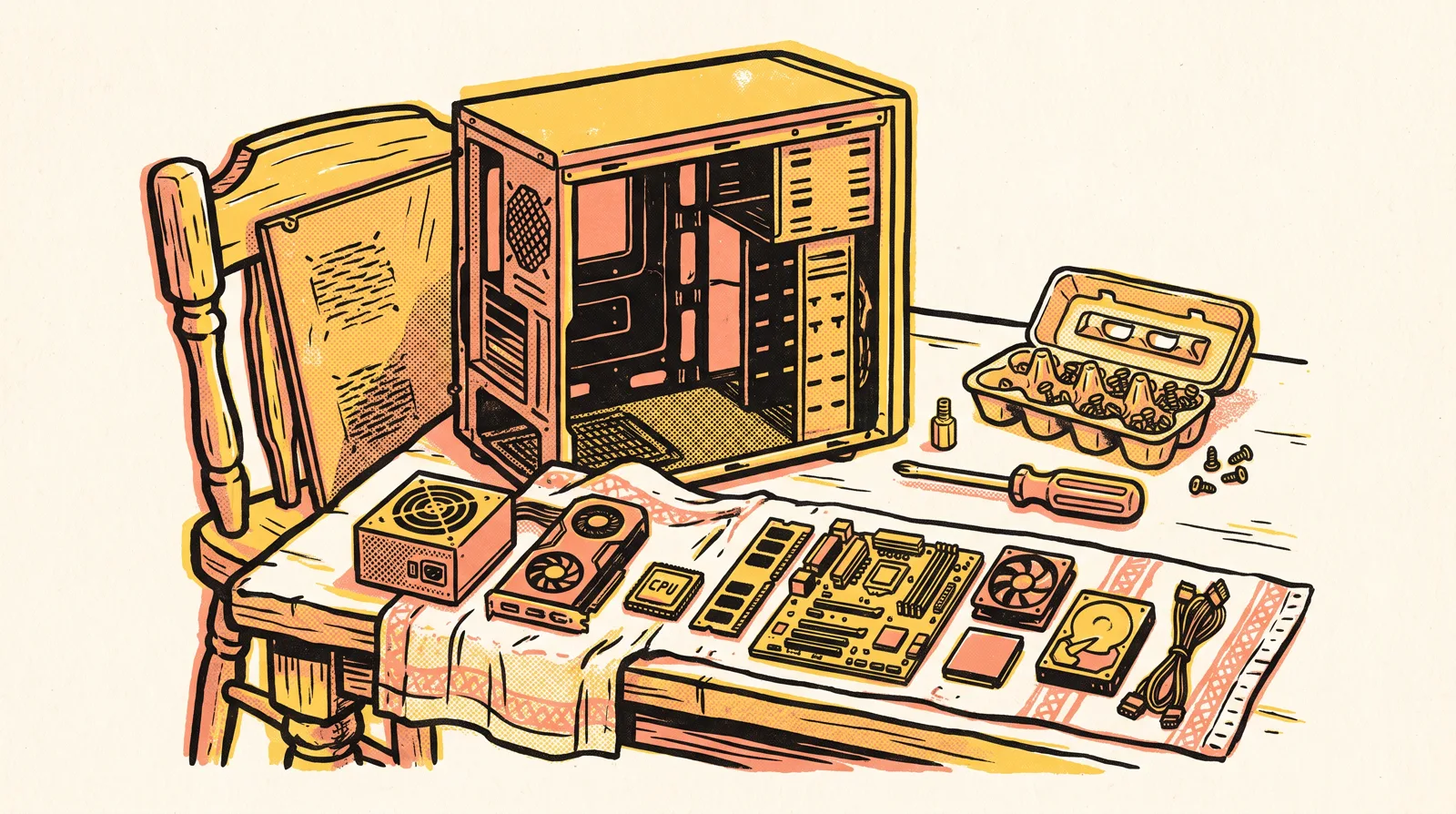
This is the segment that does not happen on a screen. A parent, a child, a cross-head screwdriver, and either a machine that has been in a cupboard since nobody remembers or a box of parts on the table. The order is deliberately backwards. Before anything is named, the case comes open and the child spends ten minutes pointing at things and getting them wrong, with the adult saying nothing. Only after that does each part get a real name and a one-sentence job. A child who has already held the power supply and felt how heavy it is does not need a diagram of one. Then it goes together: the brass spacers and the one extra spacer that kills a board silently, the memory that needs more force than anyone expects, the cooler tightened in a cross pattern, and the block of front-panel pins that has defeated people who do this for a living. Then it is switched on, and it does not work, because an adult sabotaged it beforehand. The child works a fault tree they drew themselves, one change at a time, writing down what they expected before each test. Safety is not a footnote here. Mains electricity is in the room. The power supply is never opened, by anyone, for any reason. Every hands-on lesson states plainly what the adult does and what the child does, and the unplug drill is rehearsed by the child before a panel comes off. The segment ends at the first successful power-on and not one step further. Putting an operating system on the drive is a different job in a different segment, and so is the exam theory behind what these parts are — this one is about metal, and every lesson has a path for a family with no spare machine and no budget.
طرح درس · 4 ماژول
lockآزاد میشود با دسترسی- 01 نیمکت و قوانین3 درس·1h 7m
شما میخواهید در ده دقیقه اول درپوش را باز کنید. نکنید. جلسهای که تعیین میکند این کار میتواند انجام شود یا نه، جلسهای است که هیچ چیز شل نمیشود: کدام دستگاه، اگر دوباره روشن نشود چه اتفاقی…
- 02 چه چیزی در آنجا است3 درس·1h 17m
در ده دقیقه اول جلسه اول هیچ چیز نمیگویید. کودک چیزها را نامگذاری میکند و بسیاری از آنها را اشتباه مینامگذاری میکند، و پاسخهای اشتباه تا درس بعدی برجا میمانند که آن را آزمایش میکند تا اصلاح…
- 03 ساخت3 درس·1h 46m
دو تای این درسها شامل مرحلهای هستند که فقط بزرگسال انجام میدهد، و یکی از آنها شامل تنها خرابی خاموش در این کل بخش است: یک فاصلهگذار برنجی اضافی زیر برد و دستگاه روشن نمیشود، بدون نور، بدون بیپ…
- 04 روشن نمیشود3 درس·1h 41m
دو تای این درسها قبل از ورود کودک خراب شدهاند، و تو کسی هستی که دستگاه را خراب میکنی. این عمدی است: خرابی تعیینشده یک خرابی واقعی است با زمانبندی انتخابشده. کار تو برای چهل دقیقهی بعدی این است…
پرسشهای متداول
- در Inside the Box — building a PC with your child چه چیزی یاد میگیرم؟
- Four sessions at a kitchen table with a screwdriver, an old machine or a box of new parts, and a child who ends up naming every component, mounting the board, routing the cables and working a fault tree when it does not start. Written for the adult beside them: what the child does, what you never le
- آیا نیاز به تجربه قبلی دارم؟
- خیر — Inside the Box — building a PC with your child از مبانی شروع میشود و برای مبتدیان مناسب است.
- Inside the Box — building a PC with your child چقدر طول میکشد؟
- Inside the Box — building a PC with your child شامل 4 ماژول و 12 درس است. شما با سرعت خود یاد میگیرید.
- چگونه دسترسی پیدا کنم؟
- Inside the Box — building a PC with your child در هر اشتراک پولی گنجانده شده است.
بیشتر در برنامهنویسی