code grc

安全认证考试技巧

如何应考安全认证,而不是如何掌握考试内容:回答大写的限定词、把模拟题转化为诊断工具、研究每个干扰项、合理分配时间、培养在压力下不会失效的反射条件。本课程是独立课程,与 ISACA、ISC2、CompTIA 或 Microsoft 无关,未获得其认可。

  • trending_upIntermediate
  • schedule5h 7m
  • menu_book9 节课程
  • publicEnglish
  • workspace_premiumBasic
安全认证考试技巧

课程概述

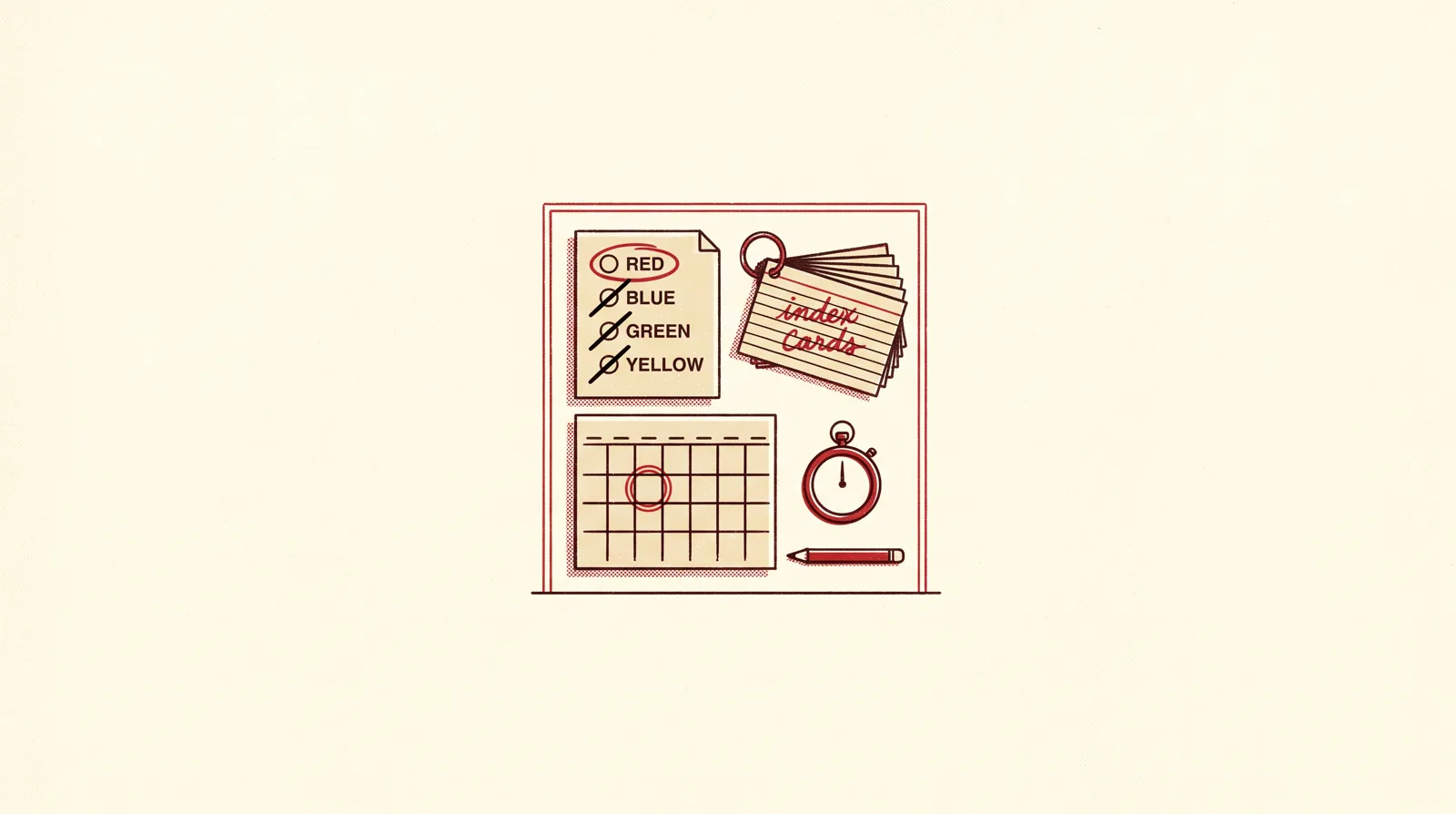
很多懂这个主题的人在这些考试中失败。通常不是因为掌握的内容有差距——而是因为他们如何理解题目、如何研究错误答案,以及如何花费四个小时。 这种格式的每道题都围绕一个大写的词展开。MOST。BEST。FIRST。GREATEST。PRIMARY。四个选项摆在你面前,其中三个是称职的专业人士真实会做的事。只有一个答案符合这个限定词。仅仅这一个习惯——先读限定词,再读主题——是这门课程中产出最高的技能,几乎没有课程教这个。 然后是学习方法。模拟题产出一个数字,而一个数字几乎毫无用处。给每道题标记领域,统计每个领域的错题数,然后学习领域而不是题目。研究解释而不是答案键:对于每个错误选项,为什么它是错的?大多数考生只读正确答案,只吸取了题目提供内容的四分之一。 然后是应考机制。什么是换算分数以及为什么你无法从原始计数计算你的成绩。每道题的分钟数、二遍法、何时标记并继续、在没有惩罚的情况下猜测的数学原理。为那些必须即时反应而不是推理的少数几个事实建立反射条件。考试当天会发生什么,包括当第一道题是你无法回答的题时该怎么办。 以及不要做什么:采集的题库网站,这在大多数机构是撤销执照的违规行为,而且准确率往往一般;为了你已经拥有的工作而追逐证书;以及在进行诊断前就预约考试日期。 可用于 CISA、CRISC、CISSP、SC-200 和 Security+。无需工具,无需实验室虚拟机。每个练习都是桌面练习:剪切一套模拟题、分类成堆、写四个解释、制作卡片、从日期反向规划。 这是独立课程。它与 ISACA、ISC2、CompTIA 或 Microsoft 无关,未获得其认可或批准,也不复现它们的任何材料。其中的每道题都是为本课程从零开始编写的。考试格式、时长、题数和计分会变化——查看你的考试当前指南了解每个数字。

课程大纲 · 3 个模块

lock解锁权限内容
  1. 01 回答限定词
    3 节课程·1h 27m

    四个选项,都是胜任的专业人士会做的事,以及一个大写单词决定答案是哪个。如果你从这整个章节只能记住一件事,记住这个模块。每一次都先读限定词再读选项,持续到它不再像是一种技巧为止。

  2. 02 将模拟考转化为诊断
    3 节课程·1h 35m

    模拟考给出一个分数。诊断给出一条指令。大多数人一次次参加模拟考,看着分数移动几个点,就把这当成了信息。那是噪声。这个模块讲的是提取有用的信号,以及两种计算——计分,你做不了;时间,你必须做。

  3. 03 反射、考场和考试日期
    3 节课程·2h 5m

    这个模块中的一切都关乎表现而非知识。你可以在咖啡时间完美定义的知识对在第一百二十道题目时就会被遗忘,解决办法是反复训练,而非讲解。计划放在最后是因为在诊断之前制定的计划只是一个带有日期的愿望。

常见问题

我将在 安全认证考试技巧 中学到什么?
如何应考安全认证,而不是如何掌握考试内容:回答大写的限定词、把模拟题转化为诊断工具、研究每个干扰项、合理分配时间、培养在压力下不会失效的反射条件。本课程是独立课程,与 ISACA、ISC2、CompTIA 或 Microsoft 无关,未获得其认可。
我需要有先前的经验吗?
建议在开始 安全认证考试技巧 前具有一定的先前知识。
安全认证考试技巧 需要多长时间?
安全认证考试技巧 包含 3 个模块和 9 节课程。您可以按自己的速度学习。
我如何获得访问权限?
安全认证考试技巧 包含在任何付费订阅中。

更多 编程 课程

Binary, Hex and Data Units
Beginner Binary, Hex and Data Units The topic that costs more marks than any other on the paper, taught by hand. Bits and bytes, binary and hex in all six directions, the 1000-versus-1024 trap, file sizes, transmission times, overflow, two's complement and character sets. Every module ends in a timed drill marked the way an examiner marks it.
从空白开始学 Python
Beginner 从空白开始学 Python 九位学生已经走过的确切步骤,从空白文件到一个能提问、检查答案并拒绝错误输入的程序。无需编程基础。无需数学。你会故意反复出错。
First Program — Scratch for ages 5–9
Beginner First Program — Scratch for ages 5–9 Nine Scratch blocks, three sessions of about twenty-five minutes, and one small program a child of five to nine builds themselves. Written for the parent sitting beside them: what to click, what they will get stuck on, what to say when it goes wrong, and when to keep your hands off the mouse.
AI Without the Hype
Beginner AI Without the Hype What the model is actually doing when it answers you, why that produces something that looks like thinking, why it invents citations, and the cost mechanic almost nobody explains: a chat resends the entire conversation on every single turn. You will do the arithmetic yourself.
IGCSE and GCSE Computer Science — Theory That Actually Gets Marked
Intermediate IGCSE and GCSE Computer Science — Theory That Actually Gets Marked The theory half of the paper, taught so it survives the exam room. The memory hierarchy and what actually happens at boot. Compilers, interpreters and assemblers, including the answer that sounds right and scores nothing. Databases from a spreadsheet up to keys and normalisation. DNS and the full path between pressing Enter and seeing the page. Systems software, and the ethical and legal section that is the easiest ten marks on the paper.
Programming for the Exam — Python Answers That Score
Intermediate Programming for the Exam — Python Answers That Score The programming half of the paper, taught at exam pitch. Pseudocode translated both ways, because the mark scheme is written in a notation nobody practises. Trace tables done column by column, including the ones with a loop and a condition inside it. Linear and binary search, bubble and insertion sort, what each costs and the comparison questions boards love. Validation against verification, and the boundary test data everybody forgets. Procedures against functions, and a systematic method for finding your own error with four minutes left.